


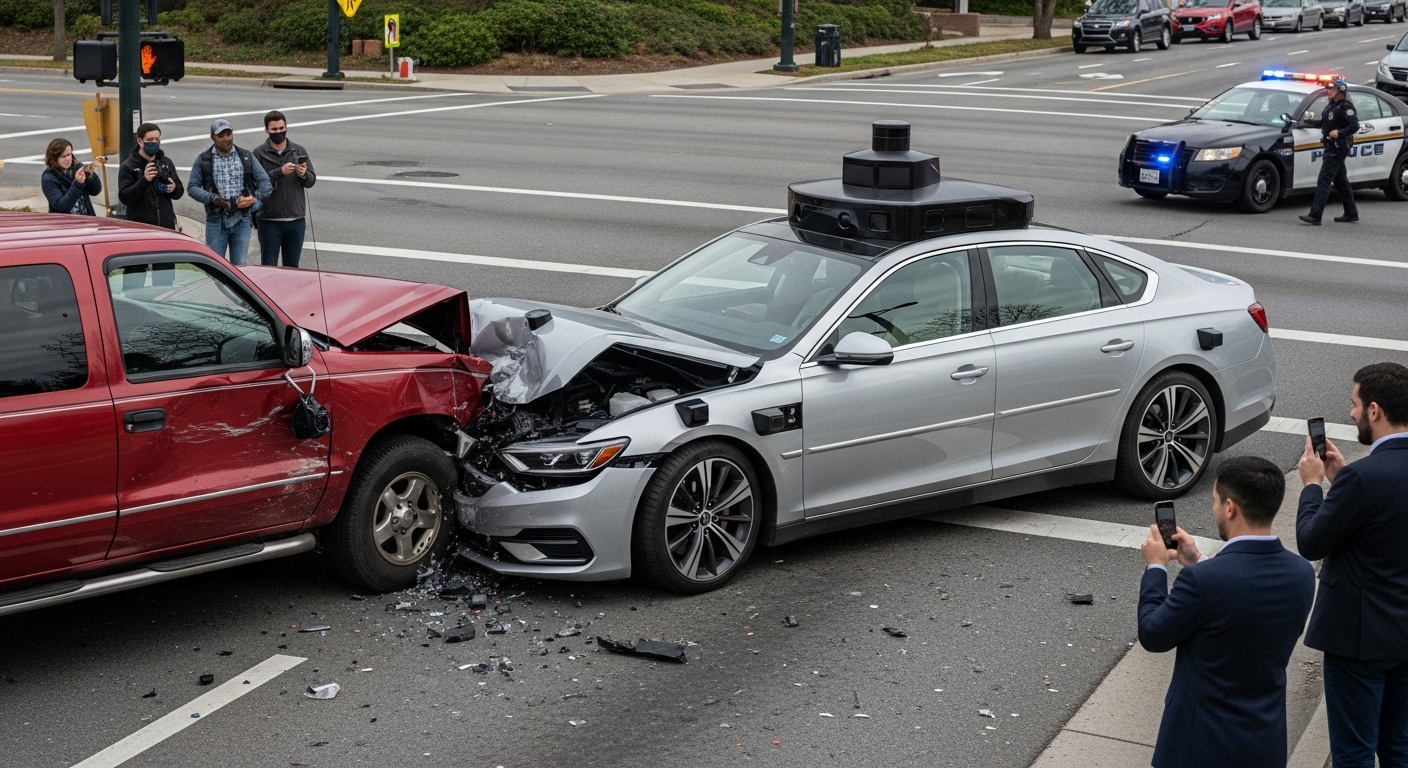
If you’ve been involved in an autonomous or self-driving vehicle accident in Texas, understanding your legal rights is essential. These cases often involve unique challenges — including determining whether liability falls on the driver, manufacturer, software company, or another party.
At Estes Personal Injury and Car Accident Lawyers, our attorneys stay ahead of emerging technology and the evolving legal landscape surrounding autonomous vehicles. We know how to navigate these complex claims and will work to ensure you receive the compensation you deserve.
Contact us today to schedule a free consultation with an experienced self-driving car accident lawyer in Texas. We’re here to protect your rights and help you move forward with confidence.
Autonomous vehicles are becoming more common on our roads. This raises questions about who is at fault when they malfunction and cause an accident. Our article will look into the legal side of autonomous vehicle accidents. We’ll also talk about your rights and what you can do.
- Understanding in autonomous vehicle accidents under Texas law.
- The importance of seeking legal representation after an autonomous vehicle accident.
- Options for compensation after an accident involving assistive tech malfunction.
- Overview of the legal process for handling autonomous vehicle accident claims.
- How to navigate the complexities of autonomous vehicle accident cases.
The Rising Trend of Autonomous Vehicle Accidents in Texas
Autonomous vehicles are becoming more common on Texas roads. This has led to a sharp increase in accidents involving self-driving cars. This trend worries lawmakers, regulators, and the public.
Autonomous vehicle technology is spreading fast in Texas. Companies like Tesla, Waymo, and Cruise are leading the way. They are exploring new possibilities with self-driving cars.
Current Deployment of Self-Driving Technology in Texas
Texas is a key place for testing and using self-driving cars. Its business-friendly environment and varied landscapes make it ideal. Cities like Austin, Dallas, and Houston are centers for testing.
- Many companies have set up testing facilities in Texas.
- The Texas Department of Motor Vehicles has rules for self-driving cars.
- Big tech companies are pouring money into research and development here.
Common Causes of Autonomous Vehicle Malfunctions
Autonomous vehicles have made great progress, but they’re not perfect. Some common problems include:
- Sensor and software failures: Issues with sensors or software can cause accidents, including programming errors, a software error, or faults in the vehicle’s sensors.
- Inadequate mapping data: Self-driving cars need accurate maps to navigate. Bad or old maps can lead to problems.
- Human error: Unlike system malfunctions, crashes can also stem from driver error by the human driver when human oversight is still required and the driver doesn’t step in when needed.
Lower-level driver-assist features like adaptive cruise control can also contribute to crashes when drivers rely on them too heavily.

It’s important to understand these issues to tackle the rise in autonomous vehicle accidents in Texas. This will help ensure the safe use of this technology.
When to Seek Legal Representation from a Self Driving Car Accident Lawyer in Texas
Accidents with self-driving cars bring up tricky legal issues. It’s key to know when to talk to a lawyer. These cases often involve many parties, like car makers and tech developers. This makes it harder to get compensation.
Identifying Autonomous Technology Failure in Your Accident
Figuring out if the car’s tech failed is important. Look for signs like:
- Unexpected or erratic vehicle behavior
- Failure to recognize or respond to road conditions or signals
- System malfunctions shown by dashboard warnings or logs
If you think the car’s tech failed, gather all the info you can, because data from autonomous vehicles is crucial for determining fault. This can include car data, the black box, other onboard data sources, witness statements, and video footage. Accident reconstruction experts and event data recorder experts may provide expert analysis of these logs to understand crashes involving autonomous systems.

Texas Statute of Limitations for Tech-Related Accidents
Knowing the statute of limitations is key for tech-related accidents. In Texas, you have two years to file a personal injury claim. But, claims with complex tech might have different rules.
Claim Type | Statute of Limitations | Notes |
|---|---|---|
Personal Injury | 2 years | From the date of the accident |
Property Damage | 2 years | From the date the damage was discovered |
Product Liability | 2 years | From the date of injury or discovery of defect |
Talking to a self-driving car accident lawyer is wise. They can help you meet deadlines and follow legal steps. This increases your chances of getting fair compensation.
Determining Liability in Autonomous Vehicle Accidents
Autonomous vehicles are becoming more common on our roads. This raises the question of who is responsible in case of an accident.
Figuring out who is at fault in autonomous vehicle accidents is tricky. It involves looking at the vehicle’s maker, the software creator, and other tech providers. Unlike regular car crashes, where the driver is usually to blame, autonomous vehicle liability may shift from driver error to product design failures depending on the level of automation and the cause of the crash, and different parties may be held liable. In mixed traffic situations, human drivers may still share liability under the specific circumstances of the collision.
Vehicle Manufacturer Product Liability Responsibility
The maker of the vehicle is key in creating and keeping autonomous cars safe. [Vehicle manufacturers] may be [legally responsible] when a [product defect] or other [vehicle defect] contributes to a crash.
For example, if a [defect caused] a sensor or camera failure, leading to an accident, the maker could be held liable for the damages.
Key areas of manufacturer responsibility include:
- [Defective products]
- Failure to provide adequate warnings or instructions
- Negligence in testing and validation processes
Software Developer Liability
Software creators and the software provider are in charge of the algorithms and software that control these vehicles. If a bug in the software causes an accident, the creator could be to blame.
This might happen if a software bug causes autonomous driving systems or automated driving systems to make an unsafe decision, such as failing to see a pedestrian or misreading sensor data, leading to an accident.
Description | Potential Liability | |
|---|---|---|
Algorithm Design | Creation of decision-making processes for the vehicle | Software Developer |
Sensor Integration | Combining data from various sensors for navigation | Software Developer/Vehicle Manufacturer |
Testing and Validation | Ensuring the software performs as expected | Software Developer/Vehicle Manufacturer |
Specialists may review software algorithms and software updates to identify defects affecting the vehicle’s operation.
Third-Party Technology Provider Accountability
Third-party tech providers give parts or services that are crucial for autonomous vehicles to work, and various parties or other entities responsible for supporting the vehicle may include mapping providers, infrastructure vendors, and cybersecurity services. If their tech fails or is faulty, they could be to blame.
This includes providers of mapping data, cybersecurity services, or specific hardware parts. automated systems supplied by outside vendors can also be implicated in crashes involving autonomous technology.
In conclusion, figuring out who is responsible in autonomous vehicle accidents needs a detailed look at the accident and the roles of all parties involved.
Texas Laws Governing Autonomous Vehicle Operation and Accidents
The rise of autonomous vehicles in Texas has led to a need for clear laws and regulations. These ensure public safety and determine liability in case of accidents. As the state continues to embrace this technology, understanding the legal framework is crucial for both developers and users of autonomous vehicles.
Current Texas Legislation on Self-Driving Vehicles
Texas has been proactive in creating legislation for autonomous vehicles. The state has passed laws that allow for the testing and deployment of self-driving cars under certain conditions. For instance, Texas law requires that autonomous vehicles be equipped with a system that can detect and respond to emergencies.
Operators of autonomous vehicles must have a plan in place for handling emergencies. They must also report certain incidents to the Texas Department of Motor Vehicles.
Key aspects of current Texas legislation include:
- Permitting the operation of autonomous vehicles on public roads for testing purposes.
- Requiring a human operator to be present in the vehicle unless it is specific exempted.
- Mandating that autonomous vehicles be capable of achieving a minimal risk condition in the event of a failure.
How Texas Courts Have Ruled in Tech Malfunction Cases
Texas courts have seen cases involving accidents caused by autonomous or semi-autonomous vehicles. While there isn’t a large body of case law yet, the rulings so far have set important precedents. Outcomes remain mixed nationwide, including litigation over Tesla’s Autopilot, and a California jury found Tesla not at fault in October 2023. Courts have generally focused on determining liability based on the specifics of each case.
They consider factors such as the level of autonomy of the vehicle, the actions of the human operator (if any), and the manufacturer’s or software developer’s role in the malfunction.
In one notable case, a Texas court ruled that the manufacturer of a semi-autonomous vehicle was liable for an accident caused by a system failure. The company had failed to adequately warn consumers about the limitations of their technology. A Florida judge also found reasonable evidence of Tesla’s negligence, and Tesla settled a wrongful death lawsuit in April 2024.
Federal Regulations vs. Texas State Laws
The regulation of autonomous vehicles in the United States is complex. Federal regulations set a baseline for safety standards across the country. Individual states like Texas have the authority to create their own laws governing the operation and testing of autonomous vehicles on public roads.
Texas state laws complement federal regulations by addressing specific issues relevant to the state. This includes insurance requirements for autonomous vehicle operators and the handling of data from vehicle accidents. States such as Massachusetts are still defining legal frameworks for self-driving car accidents, which continues to shape evolving liability standards. Other countries have also addressed responsibility issues; for example, China’s Road Traffic Safety Law outlines traffic participant responsibilities for driverless vehicles. This dual-layered regulatory framework ensures that autonomous vehicles operating in Texas meet both national safety standards and state-specific requirements.
Understanding the relationship between federal and state laws is crucial for navigating the legal landscape of autonomous vehicle operation in Texas.
Building a Strong Case After an Autonomous Vehicle Accident
After an accident with an autonomous vehicle, it’s important to build a strong case. This case must show who was at fault and the damages. Knowing what makes a good claim is key to success.
Critical Evidence in Self-Driving Technology Cases
Getting the right evidence is crucial for a strong case. This evidence includes:
- Vehicle Data: Getting data from the vehicle’s computer, including logs from the autonomous vehicle, can show what happened before impact and help explain the accident results.
- Sensor Data: Looking at sensor data like cameras and radar helps understand the vehicle’s view of the world and may show how automated driving systems responded to hazards.
- Software Logs: Checking the software logs can reveal any issues that might have caused the accident.
- Witness Statements: Gathering statements from people who saw the accident can add important details.
Accident reconstruction experts often analyze these logs, and autonomous vehicles can also lead to higher repair costs when damaged sensors and integrated technology need replacement.
The Importance of Expert Witnesses in Tech Malfunction Cases
Expert witnesses are often critical in these cases. They bring specialized knowledge to help figure out what went wrong and how bad the damage is. These experts might include:
- Technical Experts: technology experts and other specialists who can review software, system failures, and interference risks, including whether hacking affected vehicle controls.
- Accident Reconstructionists: Experts who can recreate the accident to understand how it happened.
- Automotive Engineering Experts: Professionals who evaluate the vehicle’s design and manufacturing for defects.
- Human Factors Experts: Specialists who assess human interaction with automated systems and whether the operator received adequate warnings to take manual control.
- Medical Professionals: Doctors who can talk about the injuries and what treatment is needed.
These professionals may provide testimony, and AV cases often require both traditional experts and specialized technology experts for liability assessment.
Documenting Injuries and Damages Properly
It’s very important to document injuries and damages well. Careful documentation also helps victims pursue compensation from the parties ultimately found responsible. This includes:
- Medical Records: Keeping detailed records of medical treatment, including diagnoses and treatments.
- Expense Records: Tracking all costs related to the accident, like medical bills and lost wages.
- Photographic Evidence: Taking photos of injuries and damage to show the accident’s impact.
By focusing on these areas, people can build a strong case for fair compensation after an accident with a self-driving car.
Compensation Available for Victims of Autonomous Vehicle Accidents in Texas
After an accident with an autonomous vehicle, things can get complicated. But knowing what compensation you might get in Texas is key. You could get different kinds of help for your losses.
Economic Damages: Medical Expenses and Lost Income
Economic damages help cover your financial losses. This includes:
- Medical costs like hospital bills, surgeries, and rehab.
- Money you lost because you couldn’t work after the accident.
- Future medical bills if you need ongoing care.
- Money for not being able to earn as much as before.
Non-Economic Damages: Pain and Suffering
Non-economic damages cover non-money losses, like:
- The pain and suffering from the accident.
- Emotional issues like anxiety, depression, and PTSD.
- Not being able to enjoy life like you used to.
- Changes in your relationships with family and friends.
Punitive Damages in Cases of Gross Negligence
If the accident was caused by extreme carelessness, you might get punitive damages. These damages are meant to punish the guilty party. They also aim to stop others from being so reckless in the future.
It’s important to know what compensation you might get after an accident with a self-driving car in Texas. A good lawyer can help you understand your rights. They make sure you get the help you need.
Conclusion: Protecting Your Rights in the Age of Autonomous Technology
Autonomous vehicles are becoming more common on Texas roads, bringing new safety concerns and legal questions when accidents happen. If you’ve been injured in a crash involving a self-driving car, understanding your rights is critical — and so is knowing who may be held responsible.
Determining fault in these cases can be complex. Liability might involve the vehicle’s manufacturer, the software developer, or even the operator, depending on how the technology was used and what failed.
At Estes Personal Injury and Car Accident Lawyers, we’re experienced in handling emerging legal issues like autonomous vehicle accidents. We help injured Texans navigate these complicated claims and hold all responsible parties accountable.
If you’ve been hurt in a self-driving car accident, contact us today for a free consultation. We’ll guide you through your legal options and fight to protect your rights in this rapidly changing landscape.
What are my legal rights if I’m involved in a self-driving car accident in Texas?
If you’re in a self-driving car accident in Texas, you can seek compensation. At [Law Firm Name], our lawyers will help you. Our personal injury attorneys have experience in personal injury law and can help clients make informed decisions after self driving car accidents. They will fight for the compensation you deserve.
How do I determine if the autonomous technology failed in my accident?
To find out if the tech failed, you need to look into the accident details. You should check the vehicle’s data and maintenance records, including software updates, and rely on expert analysis of onboard data when automated systems are suspected of failing.
Who is liable in an autonomous vehicle accident?
Liability in an autonomous vehicle accident can be complex. It may involve vehicle owners, the car maker, software creators, or other tech providers depending on the level of automation, including cases involving full automation or driverless cars.
What is the statute of limitations for filing a claim after an autonomous vehicle accident in Texas?
The time limit for filing a claim in Texas varies. It’s important to talk to a lawyer to avoid missing the deadline.
What types of compensation are available to victims of autonomous vehicle accidents in Texas?
Victims can get compensation for medical costs, lost income, and pain and suffering. They might also get punitive damages if the accident was caused by gross negligence. In autonomous vehicle cases, compensation claims can be harder to pursue because of insurance complications.
How can I build a strong case after an autonomous vehicle accident?
To build a strong case, gather important evidence and talk to experts, which may also require law firms with extensive experience handling autonomous vehicle accident cases. Also, document your injuries and damages well.
What are the current laws and regulations governing autonomous vehicle operation in Texas?
Texas laws on self-driving cars are changing. There are rules for how and where these vehicles can be used in the state. The rules are still evolving and may be shaped by industry standards and autonomous vehicle testing requirements.
Can I still file a claim if the autonomous vehicle accident was partially my fault?
Yes, you can still file a claim even if you were partly at fault. Texas uses a comparative negligence rule. This means you can still get damages even if you were partially responsible, and negligence claims may still apply when you share fault even if another responsible party tied to the vehicle is also blamed.