
Injured Because of Someone Else’s Negligence?
When you’re hurt in a serious accident, it can put your life on hold. You’re having trouble recovering from the injuries you suffered, and worse, the party responsible for your suffering is unwilling to take the blame or offer any help. That leaves you dealing with the aftermath of your accident alone.
But you don’t have to accept these losses. You can speak with the lawyers at Estes Personal Injury & Car Accident Lawyers to take action. With a Richmond personal injury lawyer, you have a chance to get the funds you need to recover from your injuries.
Common Richmond Personal Injury Claim Types
Personal injury law covers a wide range of accidents and incidents where a person is harmed due to someone else’s negligence. If you’ve been injured through no fault of your own, you may have the right to seek compensation—and a qualified Richmond personal injury lawyer can guide you through that process.
When you’ve been injured by another person’s carelessness, you may have grounds for a lawsuit. But you might also be confused about the details of your claim. Different claim types can impact the way you and your Richmond injury lawyer handle your case. For example, the laws you may need to consider during a defective drug claim may be different from those impacting a medical malpractice claim.
Below are just a few of the injury claim types you may seek help in recovering from:
- Motor vehicle accidents, such as car, motorcycle, and truck crashes
- Wrongful death
- Slip-and-fall accidents
- Defective medical device
- Bicycle accidents
- Pedestrian accidents
- Work injury accidents
Damages Due for Injured Richmond Residents
After a serious injury, understanding who is responsible is just one part of your recovery. You also need to know how much your claim is worth—and that can be difficult to calculate without professional help.
At Estes Personal Injury & Car Accident Lawyers, our experienced Richmond personal injury attorneys will help you identify and pursue the full extent of damages available under Texas law. These damages are the financial compensation you may be entitled to for the harm you’ve suffered.
First, your economic damages should cover the financial toll caused by your accident. Richmond residents shouldn’t pay out of pocket for expenses like medical bills, lost wages, and property damage.
But not all your damages can be added up. Your personal injury lawyer in Richmond can help you seek non-economic damages, too. These damages cover the intangible suffering you’ve experienced, which doesn’t have a price tag. Your lawyer can help you seek funds for losses such as pain and suffering or disfigurement.
Texas Law May Impact Your Claim
Recovering from a serious injury involves more than just calculating your damages—you also need to protect your right to compensation under Texas law. Many Richmond residents are surprised to learn how strict and time-sensitive personal injury rules can be.
One of the most critical legal factors is the statute of limitations. In Texas, injury victims have only two years from the date of the accident to file a personal injury lawsuit. If you miss this deadline, the court will likely dismiss your case, and you’ll lose your right to pursue compensation—no matter how strong your claim is.
Don’t risk missing out on the justice you deserve.
If you believe the clock may be running out on your case, speak with an experienced Richmond personal injury lawyer as soon as possible. A skilled attorney can help you take timely action, gather necessary evidence, and file your claim within legal deadlines.
Questions to Ask a Richmond Personal Injury Lawyer
Understanding the benefits of working with a personal injury attorney is one thing—but knowing what to ask during your first consultation is just as important. At Estes Personal Injury & Car Accident Lawyers, we’re committed to providing clear, compassionate guidance at every step. Our team will explain how Texas personal injury law applies to your situation and help you make confident, informed decisions.
To get the most from your initial consultation, consider asking your Richmond personal injury lawyer these key questions:
Top Questions to Ask During Your Consultation
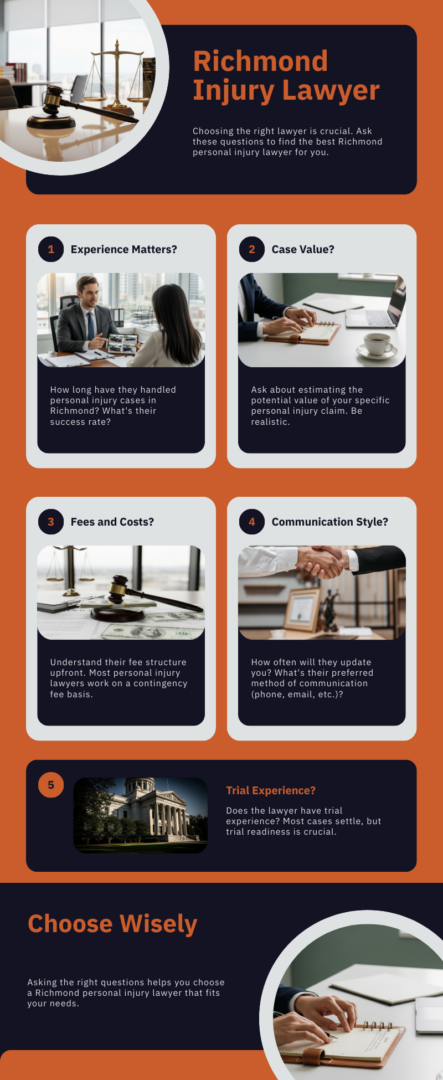
- What case-related costs will I need to pay?
Understand how legal fees and other expenses (like expert witnesses or court filings) are handled—and whether your lawyer works on a contingency fee basis. - How much time do you spend on each case?
This helps you assess how personalized your representation will be and how available your lawyer will be throughout the process. - How long will my case take?
While no attorney can guarantee a timeline, they can give you a general idea based on the case type and court backlog. - Have you handled cases like mine before?
Experience matters. A lawyer who has worked on similar personal injury cases in Richmond is better equipped to handle local courts, insurers, and claim types. - How much compensation can I expect?
Your attorney can explain what a fair settlement might look like based on your injuries, losses, and the available insurance coverage. - What kinds of damages might be available in my case?
Learn whether you’re eligible to recover both economic damages (like medical bills) and non-economic damages (like pain and suffering).
Asking the right questions can help you feel confident moving forward—and ensures you and your attorney are aligned from day one.
Call (346) 525‑3356 or schedule your free consultation with a Richmond personal injury lawyer today.